Author: Vincent

  • When a Guest Says Thank You

    A guest just took time out of their day to recognize a member of your team by name. Maybe it was an online review, a post-stay survey, or a handwritten comment card. Whatever the form, the message is clear — someone on your team made a difference. As a leader, what you do next matters more than you might think. You have a golden opportunity to foster a healthy culture, improve morale, and motivate an entire team. Handle it poorly, or not at all, and the moment is gone.

    Here are your options when the opportunity presents itself:

    Option 1: Share the Feedback with the Employee

    This one sounds easy but often gets overlooked. You have many options for sharing the feedback with the team member (verbal, email etc…) but the one of the most impactful is to print out the feedback, write a handwritten thank you note and then present it to the employee. Be sure to look them in the eye, thank them for their hard work and let them know how much of a difference they made. For especially great acts of hospitality, a unique reward/gift may be appropriate as well. Many employees (myself included) will treasure these comment cards and keep them for years to come.

    Option 2: Share the Feedback with Other Employees

    The old adage of praise in public and criticize in private applies here. Taking time to celebrate moments of hospitality is always a good idea, and it can be especially valuable in a group setting like a pre-shift where the employee who performed the task is present. Do make sure they are comfortable with that, but most people are. Other great platforms for recognition can be a physical bulletin board in a back of house area, a section of an employee newsletter or a monthly/annual employee award campaign. This has an added benefit of motivating others to want to perform at their best because, naturally, they want to feel that praise too.

    Option 3: Do Nothing at All

    Say to yourself “oh that’s great Sally made an impact. Sally is the best” and then move on with your day. Maybe you run into Sally and say “oh Sally your name was mentioned the other day, great job.” That’s ok, but not great. Giving praise without the tangible evidence is a job half done. Note that when a guest doesn’t actually write the feedback and instead shares it verbally, the leader can still share that with the team member with specific details on who shared, what they said etc…

    Bonus: Feedback doesn’t just flow one way. Taking a moment to thank the guest for recognizing your team member costs nothing and says everything. Let them know how much you value that employee and assure them the feedback will be shared and recognized accordingly.

    When a Guest Says Thank You
  • A Hotelier’s Guide to PMS and POS Migration

    A Property Management System (PMS) is the software that runs your hotel — reservations, check-in, housekeeping, billing. A Point of Sale system (POS) handles your food and beverage operations. Together, they are the technological backbone of your property. Migrating to new versions of both simultaneously is one of the most complex projects a hospitality operations leader can face, but a necessary one if you’re using outdated software.

    You may think you’re ready for the task. You may love technology, have managed big projects before, and feel confident going in, but don’t underestimate the toll it the upgrade can take. Here are the lessons I’d want someone to share with me before starting this process.

    (If you’re early in your career, this may not apply to you. This week’s post is a slight departure from the usual leadership advice, but feel free to file this one away for the future.)

    Choose the Right Vendor

    There are many vendors in this space. On the PMS side, well known options include Oracle Opera, Mews, and Agilysys Versa. For POS, you’ll find Oracle Simphony, Toast, and Infogenesis among the most widely used. Do your research, talk to peers in the industry, and request demos before making any decisions.

    One thing worth considering before you even get to vendor selection is ecosystem. Many properties piece together several best-in-class SaaS products — a PMS from one company, a POS from another, a reservation system from a third — all connected through integrations. On paper it sounds flexible, but in practice it means multiple support centers, additional implementation costs, more stakeholders to manage, and integrations that don’t always talk to each other as seamlessly as advertised. When something breaks, and something will break, you’ll spend valuable time figuring out whose problem it is.

    An enterprise provider that offers a full suite of products under one roof is usually a more expensive upfront investment, but the operational benefits are significant. One support team, one relationship, one system that’s built to work together.

    Whatever you choose, the quality of your vendor relationship will define your experience. The right partner shows up when things get hard. At the Agilysys Inspire user conference, CEO Ramesh Srinivasan opens the conference by putting his personal cell phone number on the screen in front of the entire audience. His message is simple: if you’re not getting the support you need through the proper channels, call me directly. That is the standard you should hold your vendor to. Choose wisely.

    Timing is Everything

    Timing is everything with a project of this magnitude. Begin planning as far in advance as possible — ideally six months or more before your target go-live date. Every property has a slower season, and some are fortunate enough to have a full closure. Whatever your situation, identify the window of least resistance and protect it.

    Installing critical software when the house is full is a recipe for disaster. A slower period or closure allows for thorough testing in a low-risk environment, dedicated training time for all staff members, and minimal impact on the guest experience. The more runway you give yourself, the better positioned you’ll be when go-live day arrives.

    Prepare Yourself and Prepare Everyone

    Once you have a date for the install, communicate it immediately to all staff, especially department leaders, then communicate it again. A project of this scope has a long lead time and people need regular reminders as the date approaches. Ensure everyone knows what is happening, what the expectations are, and what their role in the process will be.

    For hourly employees this may simply mean limiting time-off requests so they can attend training. For leaders it could mean lengthy preparation to ensure all data is accurately migrated from one system to the next. Having a shared calendar or project timeline is a huge help, which brings us to…

    Organize and Analyze

    There are so many moving pieces with a project of this magnitude. It is imperative that project stakeholders stay organized and not be intimidated by the tasks ahead or the obstacles that pop up along the way. Keep your to do list open at all times as you will be constantly adding to it and, hopefully, crossing things off. Some tasks are more important than others and it is helpful to identify which ones are a critical need and which can be addressed later. Time is your most valuable resource on a project like this, so spend it wisely.

    Have a Support Network

    No leader can do this alone, no matter how strong they are. During the install process, there will be a team of vendor trainers and engineers who are there to assist in implementation, training, and problem solving — they do this for a living and, when given the opportunity to do so, will really shine and help tremendously. What does that opportunity look like? Here is an example: a POS trainer arrives with a detailed preparation list of tasks to accomplish prior to his arrival. One item on that list is to prepare a training space and install all of the POS terminals for the team to use. Many properties fail to accomplish this and the first day of a trainer being on site is essentially wasted on this time consuming task. Don’t be that property.

    Support also comes from other stakeholders. Your IT department is HUGE and needs to be heavily involved in this entire process. If you do not have their buy-in, the project will fail. Other important stakeholders are the departments that use the software daily — think F&B, front desk, reservations. A POS install is next to impossible without the input and guidance of real world users. This is usually a restaurant manager, but it doesn’t always have to be. Sometimes the most valuable person in the room is a tech savvy line level employee with years of experience.

    Change Management is Never Easy

    Really this is what it all boils down to. People get so used to the way they are currently doing things, especially if they’ve been doing it for many years, that the thought of change is scary and unwelcome. Leaders need to be prepared to explain why the changes are happening, what the benefits are, and what the obstacles will be along the way. Everyone needs to understand that challenges are inevitable and that their leaders and vendor are committed to overcoming them. There is light at the end of the tunnel.

    The reasons for undertaking a project like this vary — outdated technology, a growing property, new ownership, or simply the need to meet the expectations of the modern traveler. Whatever the reason, your team deserves to understand it. When people know the why, they are far more likely to embrace the how.

    Post Implementation

    Go-live day is not the finish line, but it is a critical milestone worth celebrating. Once the install is complete and the dust begins to settle, the real work of refinement begins. Staff will discover things that need fixing, workflows that need adjusting, and features that aren’t configured quite right. This is normal. Expect it and plan for it.

    Keep the feedback loop open. Your team on the floor are the best source of information about what is and isn’t working so create a clear channel for that feedback to reach the project manager. Vendors like Agilysys invest heavily in product development and rely on customer feedback to improve. Hotel leaders bear the responsibility to outline exactly what those improvements should be. Your voice matters more than you think.

    The weeks and months following a successful migration should show steady improvement. If you have done the work outlined above, your operation will be in a better place than it was before, and it will keep getting better. These projects are daunting, but if you’re facing one, trust the process, lean on your team, and know that your operation will be better for it.

    A Hotelier’s Guide to PMS and POS Migration
  • The Bravest Person in the Room

    A few weeks ago I was standing at the back of a pre-shift meeting at a property I was visiting before dinner service. A chef was walking the team through the evening’s menu and reviewing several dishes. At some point he got to the Hamachi and began describing the use of Buddha’s hand as a tableside garnish and flavor component. He spoke about it with the confidence and fluency you’d expect from someone who has spent their career in professional kitchens. He went on for a few minutes, the team listened and nodded in agreement. It would seem all was well, until a young server assistant named Sally raised her hand.

    “I’m sorry — what is a Buddha’s hand?”

    There was a brief pause. The chef smiled, pivoted, and asked the room if anyone else wasn’t familiar with it. Several heads started nodding, slowly at first, then more confidently as people realized they weren’t alone. What followed was a short, genuinely useful explanation of what Buddha’s hand is, what it tastes like, and why it was on the plate. The whole room walked away better prepared to serve that dish and answer a guest’s question about it, all because Sally asked.

    Sally had been with the team for just over a year. She was not the most senior person in the room, nor the most experienced, but she was the only one brave enough to admit she didn’t know something. In doing so, she gave everyone else permission to admit the same.

    Some may think this question to be unremarkable and simply a byproduct of a traditional preshift. I would disagree. In order for Sally to raise her hand, she had to get past the fear of looking uninformed, the worry that everyone else already knew and the discomfort of being the one to slow things down. These are real feelings, and they keep people quiet in meetings, pre-shifts, training sessions and boardrooms every single day. Sally may not have cared about those feelings, but I can say with confidence that others do.

    The people who stay quiet aren’t less intelligent, they are just more afraid. As leaders we must create a culture where questions are encouraged and rewarded. We’ve all heard the phrase “there are no stupid questions” but I have witnessed leaders respond as if there are.

    A practical technique to confirm your team knows information is to ask the question rather than share the answer — something like “Who can tell me what Buddha’s hand is?” Hopefully you get the right answer, and if you don’t, well now you know a lesson is needed. When someone does ask a question, be sure to thank them for it. When the answer helps out the whole room, point that out and recognize their bravery.

    Sally didn’t just help herself that evening. She helped every person in that room serve their guests better.

    The Bravest Person in the Room
  • When Someone Quits

    Receiving a resignation from an employee can feel like a punch in the gut, and sometimes we might prefer to actually be punched, as the pain of losing the employee is worse. But what do you do when that notice reaches you?


    Don’t Panic

    I know firsthand the temptation is to react quickly and with distress. We may be quick to judge and assume the worst. The best course of action is to take a deep breath, shut the door, and invite the employee to sit down. Ask the following if the answers aren’t already in the letter:

    • Why are you leaving?
    • When is your last day?
    • Would you like to tell the team, or shall I?

    Is there something we can do to keep you?

    This is a big question and one to tread lightly with. If they are a great employee, many leaders will hastily offer additional money or a promotion. These can sometimes work, but they are often just a band-aid covering a deeper issue — the very issue that led to the resignation in the first place. Before making any offer, ask yourself honestly: is this person leaving because of something fixable, or because of something that has been broken for a while? If it’s the latter, a counter-offer may buy you a few months but rarely changes the outcome.


    Honor the notice, or part ways now?

    This is a decision many leaders don’t think about until they’re in it. In most cases, honoring the notice period is the right call — it allows for knowledge transfer, a proper handoff, and it sends a message to your remaining team about how people are treated on the way out. However, there are situations where it makes sense to part ways immediately: if the employee is in a sensitive role with access to confidential information, if their attitude has shifted in a way that could affect team morale, or if the relationship has simply become untenable. Each situation is different. Lead with integrity either way, and if you do let someone go before their notice is up, compensate them for that time. It’s the right thing to do.


    The Final Weeks

    Navigating the final weeks of an employee’s tenure is genuinely awkward, and how you handle it says a lot about your leadership. Don’t treat the departing employee as a traitor or a lame duck. Include them. Allow them to participate in their own succession plan. Keep your team culture as healthy as possible during what can be a turbulent time for everyone.

    If the employee had a long tenure or held a significant role, consider a going-away gesture. It can be as simple as a signed card or as meaningful as a team gathering. Every situation is unique, but the gesture should always be sincere.


    The Exit Interview

    Many organizations skip this entirely, which is a missed opportunity of the highest order. If you are going to do one, and you should, the goal is not to complete a form. The goal is to create an environment where the employee feels safe enough to tell you the truth.

    That means conducting it at the right time (not the day they resign, when emotions are high, but closer to their final day), in a comfortable and private setting, and ideally with someone they trust — whether that’s their direct leader or an HR partner. Most importantly, the person conducting the interview should be genuinely listening, not defending.

    Here are the questions worth asking:

    • Why are you leaving? (This answer often differs from what they said on resignation day — the pressure is off now)
    • What was the most satisfying part of your job? What was the least?
    • What could your supervisor have done differently to support your success?
    • How did you feel about the training and development available to you?
    • Were you satisfied with your compensation and benefits?
    • Would you recommend this company to someone you care about?
    • What suggestions do you have for your department or the organization as a whole?
    • Any parting thoughts?

    What you do with the answers matters just as much as asking the questions. If the feedback goes into a file and is never revisited, you’ve wasted everyone’s time. Share relevant themes with your leadership team. Look for patterns. Act on what you learn.


    Reflection

    After the exit interview, the most important conversation you will have is with yourself.

    Was this preventable? Was it predictable? Could you have seen this coming?

    In my experience, the exit interview almost always reveals a failure of the ongoing relationship — specifically, a failure of consistent one-on-one conversations and genuine engagement over time. Almost everything an employee shares on their way out could have been addressed months earlier, had someone been asking the right questions all along.

    The most common reason people leave isn’t money. It’s feeling unseen.

    When an employee cites growth, trust, empowerment, or communication as reasons for leaving, that should ring alarm bells and be immediate cause for reflection and change. And if you have multiple employees leaving for the same reasons? Now the really big alarm bells are ringing — the ones in the GM’s office.


    In a perfect world, the employee is leaving for a glorious new opportunity — one that is fulfilling, lucrative, and simply too good to pass up. In those cases, all you can do is congratulate them, thank them for their hard work, and send them off with love.

    The unfortunate reality is that most resignations trace back to negative and preventable factors. While these situations are difficult, the worst thing we can do is let someone walk out the door without having an honest conversation, asking the hard questions, and genuinely learning from what they have to say.

    Every exit interview is a conversation you should have had earlier. The goal is to make sure the next one never gets that far.

    When Someone Quits
  • Paying Attention

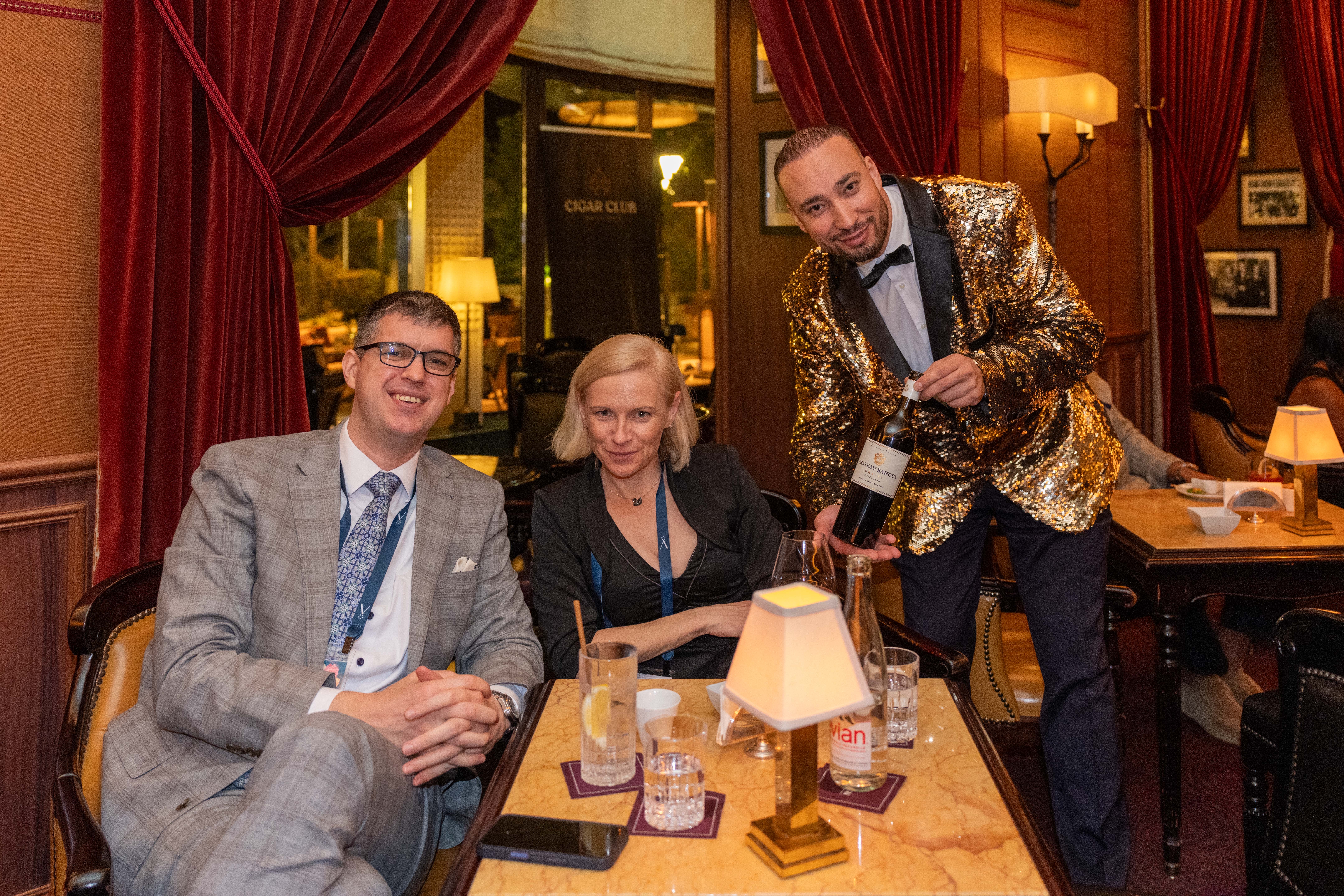
    I recently attended the Forbes Travel Guide Summit in Monaco. I’ll let others write the recap — there are people far better positioned than me to do that justice. What I will say is that the setting was extraordinary. The venues were stunning, the food was exceptional, and at one point I found myself at a private party inside the Hôtel de Paris Monte-Carlo, one of the most iconic hotels in the world, bought out in its entirety for the first time in its history. There was champagne, caviar, and more luxury per square foot than I have ever experienced in my life.

    And when I got home, the moments I couldn’t stop thinking about, and the moments I wanted to share with our team, had nothing to do with any of that.

    They were small. Almost invisible. And they were the best reminder I’ve had in years of why the little things are everything.


    Night One: The Fruits of our Fun

    My wife Alex and I arrived at the conference a day early and found ourselves without dinner plans. We landed at a restaurant called Pavyllon inside the hotel. It turned out to be the best meal of our entire trip, not because of the food (although it was excellent), but because of the people.

    Over the course of the evening, a genuine rapport developed between our table and the staff. The glasses were never empty. The bread plate was refreshed within seconds of depletion. The staff was engaging, authentic and charismatic, the total opposite of transactional. It felt like a conversation with new friends that happened to involve incredible food and wine.

    Near the end of the meal, we shared a dessert and were enjoying our final sips of wine when we were presented with two additional sweet bites. Our server recommended we enjoy one first, as it would pair better with our remaining wine. We were quite pleased with our experience and would have walked away happy right then.

    After one last thank you to a server, Carlos, for a wonderful evening, he mentioned we should have one last treat. We watched him exchange a few quiet words with the pastry chef, and moments later he arrived with a small plate of cured fruit. He explained it can only be harvested during certain times of year and warned us, with a smile, to enjoy it carefully — too much can cause nausea, though he assured us the kitchen eats it all the time without issue.

    The story made us lean in and the gesture made us feel like we had received something special, something that could only happen after forming a relationship with the team at Pavyllon. As Alex and I walked away, the conversation wasn’t “that was delicious” but rather “that was so much fun!” There are few better compliments to a meal than that.


    Night Two: What Stood Out in the Most Spectacular Hotel I’ve Ever Been In

    The following evening was the opening party of the Summit held inside the aforementioned Hôtel de Paris, a spectacular venue full of history, glitz and glamour.

    At some point I found myself drifting through one of the rooms, half-empty glass in hand, taking it all in, when, almost magically, a server appeared at my side armed with a magnum bottle of champagne and a smile. He silently refilled my glass before I even registered it needed filling. Surrounded by all of that grandeur, that was a moment that really made me feel hospitality.

    I wasn’t the only one. A fellow guest at the same party mentioned that while seated outside on one of the balconies, a staff member had quietly appeared and draped a shawl over her shoulders to keep her warm. Nobody asked or complained, someone just simply noticed she was cold and did something about it.

    Later that evening, Alex and I settled into Le Bar Américain, one of the most storied bars in the world, also inside the Hôtel de Paris. Within about 15 seconds of sitting down, a server noticed we didn’t have cocktail napkins and placed them under our drinks. Ten seconds after that, bar snacks appeared in front of us. Again someone was paying attention and acted before we could want for anything.

    Our final moment occurred when Alex spotted a beautiful cocktail at the table next to us and asked our server what it was. He described it and mentioned the base spirit was vodka. Her face fell slightly (she’s not a vodka person) and she said, “Oh, never mind.”

    Most servers accept that and move on or perhaps wait for another choice to be made. Instead, he paused and asked: “What is your favorite spirit?”

    “Tequila,” she said. To which he replied, “Perhaps you may enjoy a margarita?”

    This was another moment that may seem insignificant, but it demonstrated the power of taking the extra step, asking an open ended question and providing a level of care that is elevated beyond service.


    The Common Thread

    A server who heard “never mind” and got curious instead. Napkins before you miss them. A rare fruit with a story. A glass refilled before it was empty. A shawl on a cool evening.

    None of these cost much. None required a manager’s approval. What they required was an engaged team member who is genuine, present and human. Someone clearly took the time to hire the right people, train them right and is taking care of them right. These moments happened because of a strong culture deeply rooted in the concept of care.

    I was surrounded by caviar, chandeliers and history. What I remember is a champagne ninja and a server asking my wife what her favorite spirit was.


    What This Means for You and Your Team

    Think about your last shift. How many “never mind” moments did your team accept and walk away from? How many half-empty glasses went unnoticed? How many guests left perfectly satisfied when they could have left with a story?

    The goal is to build a team that is genuinely curious about the people they’re serving and empowered to act on what they notice.

    Recognize the staff members who go slightly beyond the script. Teach your team to ask open-ended questions and ultimately build a culture where noticing is celebrated, not just efficiency.

    Your property doesn’t need to be in Monaco for this to work. It just needs people who are paying attention.

    Paying Attention
  • Excellence in Action: KLM Airlines

    In June of 2025, my wife and I travelled with our then 1 year old son Henryk to Poland. It was his second flight ever and his first international flight. Like many parents, we were nervous – nervous that he wouldn’t sleep, would cry the whole time and of course that we would be those passengers that disturbed others.

    As our journey began, KLM provided exceptional service and our son thankfully rested in solace. Our flight attendant was efficient in her job duties but more importantly, she was genuine in her approach and care. She made eye contact, smiled and of course asked about Henryk. Where were we headed? How old was he? Had he flown before?

    When she learned it was his first international flight, she smiled and disappeared for a moment. She came back with something we didn’t expect: a little baby flight kit.

    Inside was a children’s eye mask, a kids bag tag, a coloring kit, and a handwritten note congratulating Henryk on his first international journey.

    KLM Kit contents

    It was such a small thing and likely cost KLM a few dollars. Operationally, it took the flight attendant maybe three minutes of her shift, but in that moment we felt the magic of true hospitality. Our family felt seen, heard and that we mattered. The flight attendant helped turned what could have been a stressful flight into something special and memorable. Henryk still has his little baby kit and we still have the note. He’s not quite old enough to color just yet, but when he is, rest assured we will use it!

    Scalable Intimacy

    Will Guidara calls this “scalable intimacy” in his book Unreasonable Hospitality. It’s the art of creating personalized, memorable moments – at scale.

    At his restaurant Eleven Madison Park, they had a “hangover kit” for guests who looked a little worse for wear the morning after. At KLM, they have baby flight kits for little travelers, and maybe even other gifts for different occasions. KLM has probably given out thousands of these kits on flights around the world. But it was the first time we received it, and I can only imagine we were among the many who felt a bit of magic from this moment.

    What Hospitality Leaders Can Learn

    So what can hotel and restaurant leaders take from this?

    Ask questions and listen closely. That flight attendant could have just served drinks and moved on. Instead, she asked about Henryk. She learned our story, listened closely and identified an opportunity for authentic hospitality. Train your team to be curious about guests – not intrusive, but genuinely interested. The questions unlock the opportunity, but you must listen to identify it.

    Build systems for intimacy. You don’t need to invent something personal for every guest. Create repeatable moments that feel personal. First-time guests. Anniversary dinners. Business travelers who’ve stayed 10+ nights. Families with young children. Build the system, then train your team to recognize the moment.

    Small gestures, big impact. That kit probably cost KLM $5, but the loyalty it created was priceless. My wife and I are already planning another trip. We’re flying KLM. Not because they have the cheapest fares or the most convenient schedule, but because a flight attendant took three minutes to make our son’s first international flight special.

    The best hospitality doesn’t always require grand gestures. Sometimes it’s just noticing – and showing someone you noticed.

    Excellence in Action: KLM Airlines
  • Learning from Leaders: Damien Olsen

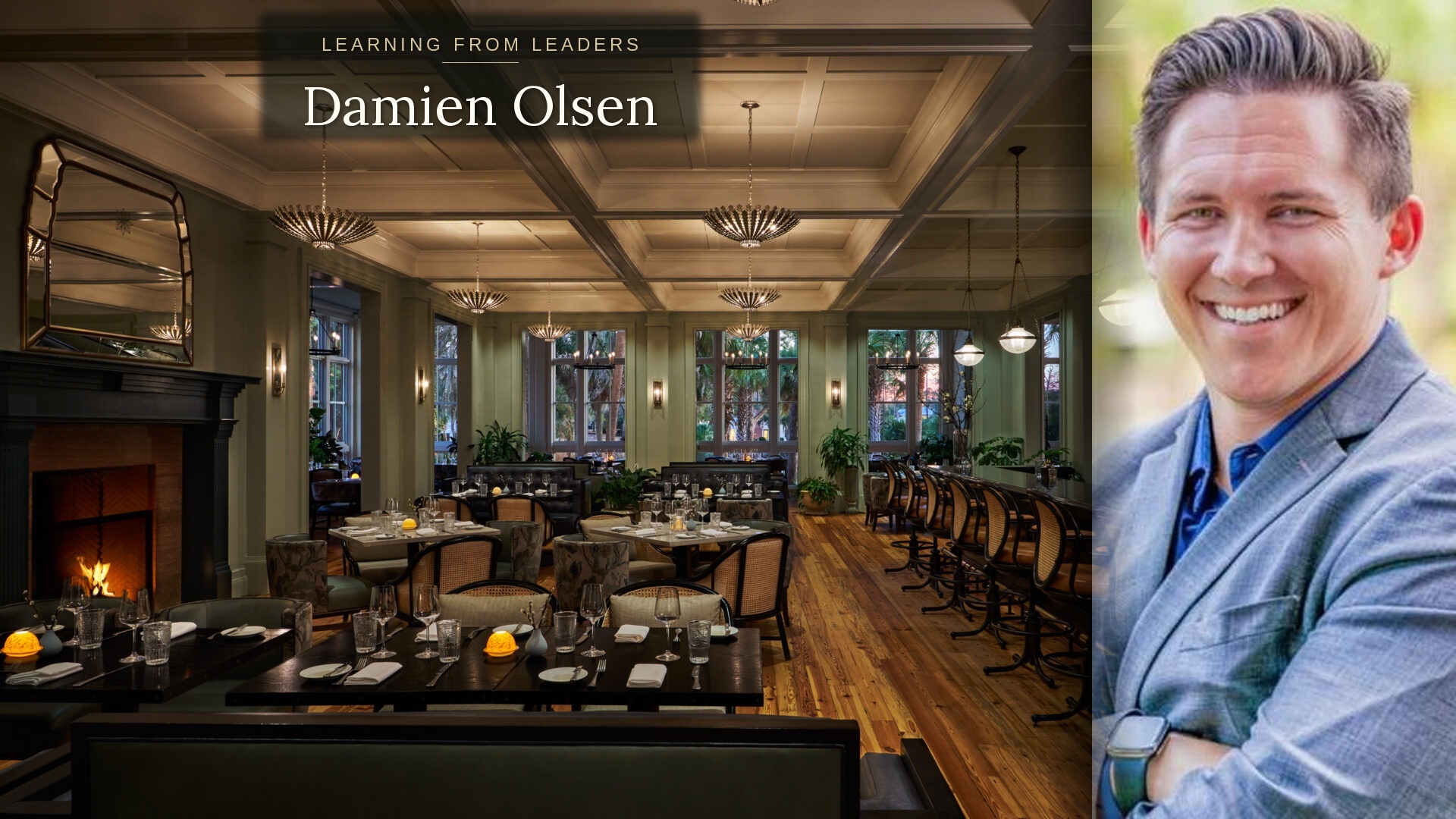
    When I started this blog, one of my goals was simple: help young people understand that hospitality can be more than just a paycheck. It can be a career. A calling. A way to make a genuine impact on people’s lives. Damien Olsen gets this better than most.

    Damien is the Assistant Director of Food & Beverage at Montage Palmetto Bluff in South Carolina. But what sets him apart isn’t his title or the size of the operation he runs—it’s his philosophy. Above everything else, his departmental goal is to “create better people.” Not just better servers or managers, but better human beings.

    That’s exactly the kind of leader we can all learn from. So I sat down with Damien to talk about servant leadership, how to convince young people this industry is worth pursuing, and why words are the most powerful tool a leader has. Here’s what he had to say.


    Tell us about yourself – where you work and what you do.

    I’m Damien Olsen, Assistant Director of Food & Beverage at Montage Palmetto Bluff in Bluffton, South Carolina. I’ve been here almost five years, but with Montage International for almost eight years.

    We have about 10 revenue centers including banquets. I’m second in command in F&B, following my Director. I have a management team of about 12 managers who all report to me.

    A majority of my days are spent removing roadblocks for our teams and investing in people to be a little bit better every day. I support the management teams with associate experiences, financial integrity, and product execution. I focus on revenue streams, but guest and associate experience is what drives my day to day.


    What was your first hospitality job and what did it teach you?

    I was hired from a career fair at my high school to work at The Gasparilla Inn located on Boca Grande Island, Florida. I was hired as a seasonal beach club attendant. I grew up in the area but was never exposed or experienced in the realm of luxury. The role was basically to greet guests, set up their beach chairs and umbrellas, provide towels and just overall be of service.

    I wasn’t exactly the most outgoing person when it came to people I didn’t know, but this job taught me that I really needed to get out of my shell when it came to service and that meeting new people is such a blessing and not a burden.

    What led you to pursue a career in F&B specifically?

    F&B has my heart because of its intensity. F&B gives me the closest feeling of a high functioning sports team, which drives my competitive nature to a whole new level.

    Consistency is such a huge piece of the food service industry. Each day we have to be on stage and perform at a very high level for people who experienced it prior and want it again, or those who have never experienced it but have expectations through the roof.


    Do you have a leadership philosophy? A north star or core value?

    Yes, absolutely. Servant leadership. I have been so fortunate to experience a few promotions over my life thus far and I attribute it to those leaders who never gave up on me and pushed me to see what I didn’t see.

    I will absolutely never give up on my team. This goes personally and professionally. I spend a lot of time trying to get to know them all, so that I better understand their needs and how to get the best out of them. Relationships for me are top priority. If I understand you as a person, I know how to lead you better. Simple as that. They feel cared for and trusted.

    I live my life in a way where I am owed nothing. I deserve nothing, and rent is due absolutely every day. This allows me a place of humility always. I have been blessed in so many ways in my life and I choose to use gratitude, positive attitude and my words to better the world around me.

    Words are words, but used in the right way can be the tool that allows people to see beyond, push through adversity and become a better professional or person.

    Most importantly, it’s my actions that I take pride in. I try my hardest to lead by example, be fair but firm, hold people to a standard but live with empathy, and overall do anything I say I am going to do and never ask something I wouldn’t do.

    Finally, integrity is a value held within the eight values we hold ourselves to at Montage. But for me personally, it means everything. It is a sign of good character. I have made many mistakes in my life and challenged relationships through my actions, but it was all to help build a better person in the long run. Integrity shines the brightest when actioned.

    You keep a guest check on your wall. Tell me about that.

    I have a check that I hung up from April 6th, 2022. It was the day after we opened River House when I was the restaurant GM. A guest wrote on the top: “an hour and 30 minutes for bread, another hour and 50 minutes for food.” He documented every item that was cold – which they weren’t supposed to be – and basically obliterated me in the middle of the dining room on our second day open.

    It was a $428 bill for four people and it’s the most humbling reminder I have that I consistently look at. It tells me: Hey, you’re not perfect. You’re trying to be, but you’re not perfect.


    Tell me about your goals as a leader.

    Above anything else, my department goal is to create better people. It keeps me grounded and fighting for the same thing. It doesn’t matter the tenure – you’re creating a better person.

    Associates today want purpose. They don’t want to just clock in and clock out. But when you make them feel like they just want to clock in and clock out, they’re just going to clock in and clock out.

    I have associates at multiple restaurants at this point that stay late after their shift to build training packets for newer staff. It’s not because I said, “Hey Joe, you’re going to create that.” It’s because they feel part of the solution. That’s what creates people to go above the call of duty.

    Can you give me an example of someone you’ve helped develop?

    I have a young man who started here as a server assistant. He comes from a very broken lifestyle that probably didn’t allow him the confidence to aspire to be more than what society dictates.

    With a lot of push and a lot of direction and a lot of drive from people that believe in him, he’s now a server making close to $400 a night on average. He’s a success story because now he’s dealing with clientele that he would otherwise not be associating with. And it’s just by the simple formula of believing in somebody.


    One goal of this blog is to help young people understand that hospitality can be more than just a paycheck. How do you convince someone that this industry is worth pursuing?

    The overarching message that I’ve always sent is that this can be fun. Every time the stigma of food and beverage comes to light, it’s like “bye bye weekends, holidays and nights.” I think that is incredibly archaic and can be fixed through smart leadership.

    How do I convince young associates here in food and beverage to really differentiate between being a server as a job or being a server as a career? It’s more or less finding people that want it, that care. I can’t teach you to care, but I can teach you the technical aspects of your job.

    This industry has so many perks. You’re learning how to be a better person. You’re gaining skills that will benefit you far beyond the dining room.


    What does a one-on-one conversation with a team member look like for you?

    The first question that comes out of my mouth is I ask them how they’re doing. I’m not asking like, “Hey, how you doing?” It’s like, “Hey Joe, how are you? How is Joe today?” And I make him tell me, “Well, you know, I got such and such going on at home. My dog’s going through this.”

    I’ve made multiple people cry in my office because I make them download what is happening in their life. I must understand it because then I have a place of empathy, but I also have a place of understanding when you’re not performing at the level I need you to.

    If I understand you as a person, I know how to lead you better. Simple as that.


    How do you show recognition to your team?

    Many who know me know that I am very energetic, so this radiates with my efforts to make people feel good. I love recognizing the basics of one’s job – whether they carried a large tray of soiled dishes with one hand, dropped the items at the table the correct way, nailed their financial review, or helped cultivate a culture of winning. I try to praise in public as much as I can and make our teams understand that we see a lot and need to support great behaviors.

    We use handwritten “magic cards” at Montage to recognize valiant efforts and great attitudes.

    I do not think recognition always needs to be at the hands of gift cards or trips. Most times people just want to be told they are appreciated and doing a great job.

    Imagine a world where we spend more time saying to people we enjoy: “I am so happy you are here with us.”


    What separates good service from great service?

    Simply put – personalization. The best service I have ever experienced was the natural flow of allowing the guests to drive the bus on timing, but the service team was always there to take the wheel when needed. Most people do not want to make decisions, and when a confident service team comes up and demonstrates that, I get excited.

    It means they are reading the room, paying attention to details and overall just caring. I tell my teams all the time: It is truly about “how we make people feel” and that can be shown in a plethora of ways. Whether through anticipatory service needs or just checking in on the guests and thanking us for being patrons.


    What’s your best advice for someone stepping into their first leadership role?

    Enjoy the ride. Professionals these days want to be CEOs tomorrow but often never stop to appreciate the ride it took to get there, where you grow as a person and learn so much more about yourself than you learn about those around you.

    It’s a marathon and not a sprint. Find a leader you trust and want to be around and learn from and stick to them. We stay for the people, not for the corporate flag.

    Make sure you always stay uncomfortable. The best moments of my career were me deciding to do something I really didn’t have the confidence in doing but that I knew were worth the effort.

    Who do you follow? Any must-reads for new leaders?

    Simon Sinek is incredible. Unreasonable Hospitality is an absolutely must read. Will Guidara is my spirit animal and embodies through his experiences and words everything I believe in when it comes to hospitality.

    The Culture Code is a book my team has gifted us to read for a course. Culture is a community effort that is often overlooked but can do so much harm if not prioritized in an organization.


    LIGHTNING ROUND

    Coffee order?

    Buzz latte from our Buzz coffee shop – cinnamon, honey, espresso, milk. See you later.

    Best meal you ever had?

    Daniel Humm’s Charleston Place pop-up in Charleston. The team knew we were coming. We felt seen, heard and understood. They were like, “Here we go, strap in and let’s get ready to party.”

    If you weren’t in hospitality, what would you be doing?

    Either a firefighter or a pilot.

    Guilty pleasure TV show?

    Tell Me Lies on Hulu

    One small thing everyone in leadership should do every day?

    Find something to be grateful for each morning. Or workout – work out in the morning and you’re a changed person.

    Favorite quote?

    “Service is the delivery of a product. Hospitality is how that delivery feels.”

    Favorite interview question to ask?

    “In your own words, what is luxury?”

    Fill in the blank: The secret to great hospitality is…

    Treating everyone as if they’re in your own home.


    Damien Olsen is the Assistant Director of Food & Beverage at Montage Palmetto Bluff in Bluffton, South Carolina.

    Learning from Leaders: Damien Olsen
  • The Parking Spot Theory

    There’s a popular concept called The Shopping Cart Theory. The premise is simple: returning your shopping cart to its proper place, even when no one’s looking, reveals your character. It’s a small act that demonstrates consideration for others.

    In leadership, specifically at the workplace, we have The Parking Spot Theory. Let’s take two scenarios:

    Scenario 1

    Your workplace has a dedicated employee parking zone. Do you take the spot closest to the door? Maybe a reserved space for the top dog? The best leaders know that servant leadership knows no boundaries. Here is Pinehurst Police Chief Glen Webb’s approach to his team:

    webb

    Chief Webb’s LinkedIn post showing his car parked at the back of the lot

    That’s quality leadership – well done Chief.

    Scenario 2

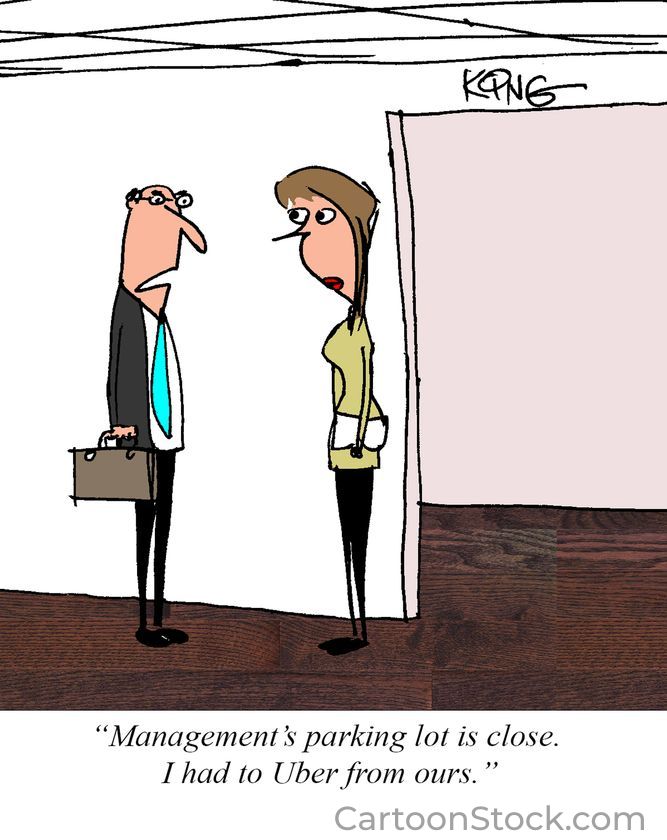
    Your hotel has no employee parking, or it’s limited/far away; however there is a guest parking lot close to your office. What’s the harm in parking there, there are plenty of spaces? Here’s the harm. In hospitality, our North Star is always the guest. We are here to serve them and provide a safe, relaxing experience. Why then should we subject a guest to walking farther to our hotel or restaurant?

    Picture this – a guest arrives late to the hotel, it’s raining. They park their car in the closest available space (not close at all) and head for the front door, luggage in tow. As they approach the hotel, soaking wet and struggling with their bags, they pass an employee getting into their car at the front row. That guest now knows exactly where your priorities are—and they’re not with them.

    You might be thinking this is a small thing, and you’re right, it is. But that’s exactly why it matters. Leadership is about more than big decisions and strategic vision. It’s about the daily choices that reveal what you actually value. Your team is watching. They notice where you park, how you treat the staff, whether you clean up after yourself in the break room. These small acts either reinforce or contradict everything you say in meetings about putting others first.

    Leaving the grocery store? Please return your cart. Arriving to work? Please park in the back.

    The Parking Spot Theory
  • Turning Around an Upset Guest

    Upset guests come with the territory in hotel leadership, there’s just no escaping it. The bad news is these conversations are difficult. The good news is every single one of these conversations is an opportunity for exceptional hospitality. The key, and you’ll see this word throughout, is authenticity. There are several approaches to employ when faced with an upset guest, but my favorite is the H.E.A.T. method (taught to me by the great Cindy Novotny) which stands for:

    Hear
    Empathize
    Apologize
    Take Action

    Let’s break them down:

    Hear

    Surprisingly this is where many people fall short and where the biggest impact is. Many times when a guest is upset, they just want to be heard. They want to share their frustration and ensure their feedback is authentically addressed. For many guests, this is more important than the solution. It’s like therapy, you can’t bottle this stuff up (this is a leadership blog and not marriage advice but the same applies!). For this stage, the goal is to listen closely and prove to the guest you genuinely care. I recommend having this conversation in a comfortable environment, away from busy guest spaces (like the front desk) and preferably sitting down. Bring a notebook and take notes of all the details the guest shares, feel free to repeat back any important information they share.

    Empathize

    This part is easier than you think. The goal is to let the guest know you authentically care. Put yourself in their shoes. Think with their wallet. Imagine you just went through the exact experience they did and say what comes to mind such as “I can understand how frustrating and disappointing that must have been – you have every right to feel that way”. Additionally, I like to start this step with thanking the guest for the feedback as it provides the opportunity to make it right, not just for the guests who complained, but for all guests in the future. A complaint is a gift. Most people feel vindicated in knowing they are preventing this situation from happening to someone else.


    Apologize

    Another easy one! Quite literally the most basic step in this process is to say you are sorry. I will add one thing that might seem controversial – many people say sorry and their intention is not to accept blame or ownership but rather to just say they are sorry for what the person is going through. I think this is wrong and indicative of poor leadership. My philosophy is that we win as a team and lose as a team. If a server rings in a steak rare and it’s served to the guest well done, the guest will likely complain. The server should not say “I rang it in rare, the kitchen messed this up”. They should say “You’re right sir that should have been rare, I am so sorry – we will get this fixed right away”. When apologizing, do it on behalf of everyone and never give empty excuses.

    Take Action

    This one can be challenging, but it’s where the opportunity lies and where we should spend most of our time and energy. Now that the difficult conversation is coming to a close, most guests expect a resolution – something to make the situation right. Each situation is different, and we need to make educated decisions on what the resolution is, but we must do something. I recommend a closing statement here with the guest that reassures them we will make it right. Give them your business card and let them know you’ll be in touch ASAP with next steps. Buying a little time before taking action can go a long way. It allows you to reconvene with other stakeholders, review the situation as a whole, and come back with a thoughtful resolution rather than a knee-jerk reaction. Just make sure ‘a little time’ means minutes or hours, not days. Many people go straight to financial compensation, but with a little creativity, there are other avenues. Is the guest joining for dinner tonight? Is there a special experience we can provide? Do they live locally and will be visiting in the future? Having a system to share upset guest scenarios with all staff can be helpful in turning a guest around as everyone can pitch in.

    Follow Through (Bonus Step)

    Ok, you’ve listened intently, empathized and apologized profusely, and put the full court press on resolving the problem – what’s next? In an ideal scenario, the guest will walk away with a feeling that the hotel took their feedback seriously and made it right. Sending a follow up thank you email is always a good idea, especially when a future concession is offered. Now all that’s left is to assess the situation with your team and figure out what went wrong and how we can learn from it. Complaints are inevitable, it’s how we respond to them that defines us.


    Note: For taking notes during these conversations, I carry the Levenger Pocket Briefcase. It’s not cheap, but it’s lasted me many years and fits perfectly in a jacket pocket for moments like these.

    Turning Around an Upset Guest
  • How to Stay Organized

    Derek Sivers, entrepreneur and author, has a provocative take on being “busy”:

    “Every time people contact me, they say, ‘Look, I know you must be incredibly busy…’ and I always think, ‘No, I’m not.’ Because I’m in control of my time. I’m on top of it. ‘Busy,’ to me, seems to imply ‘out of control.’ Like, ‘Oh my God, I’m so busy. I don’t have any time for this shit!’ To me, that sounds like a person who’s got no control over their life.”

    He’s right. Lack of time is really lack of priorities. When I catch myself feeling “busy,” it’s a signal that I need to reexamine my systems and rules.

    Every leader needs a method to stay organized. It’s absolutely essential. The method is your choosing, and I’ll share mine soon, but succeeding without a system for managing your tasks, time, and communication is nearly impossible. It doesn’t need to be fancy – I know a great leader who has an old school planner with little stickers that represent important reminders. She will carry it with her to every meeting and it’s fun to watch her put a sticker on a particular day. She never misses a deadline.

    My preferred method is a digital ecosystem utilizing whichever tools your organization has adopted. For us, and many others, it’s Microsoft. If you’re in a Google Workspace environment, the principles are the same—the tools just have different names.

    My Setup

    Below is my setup and some helpful tips for utilizing each:

    A Task Manager (I use Microsoft To Do)

    This is your master to-do list. Anytime you think of something that needs to get done, add it here. Some leaders prefer pen and paper, rewriting their list fresh each morning—that works too. The beauty of MS To Do (or comparable digital tools) is the “add to my day” feature. You can pull specific tasks into your daily focus without your entire list overwhelming you.

    Below is a screengrab from my Task manager. You can see that I have 46 tasks on my list, 6 of which I have added to my day. You’ll also notice I have one task marked as Important which is critical I complete ASAP, 5 that are in “Planned” which have specific due dates and 3 Flagged emails which comes directly from Microsoft Outlook.

    to do list

    Email Management (Microsoft Outlook)

    Speaking of Outlook, I know many leaders who excel at inbox management—I’m not one of them. Below is a screengrab from someone who is (with a fairy tale twist to protect anonymity):

    fairy tale inbox

    Look at that organization! Folders, subfolders, a clean inbox sorted by date. It’s beautiful. My approach is much simpler, perhaps to the frustration of my colleagues: I leave emails unread if I need to address them, and I don’t categorize. It works for me, but I’ll be the first to admit it’s not a system worth replicating.

    Outlook has powerful features that can transform your email management if you’re willing to invest the time:

    • Rules and filters to automatically sort incoming messages
    • Categories and folders to organize by project, priority, or sender
    • Flagged emails that sync directly to your task manager (as you saw in my To Do screenshot)
    • Quick Steps to automate common actions

    If email management is something you want to master, I recommend checking out tutorials by Mike Tholfsen on YouTube. He’s a Microsoft MVP with excellent guides on Outlook productivity. He’s far better at this than I’ll ever be.

    Calendar Management (Microsoft Outlook Calendar)

    Although I struggle with inbox management, I do rely heavily on Outlook Calendar. I try to plan my week in advance, working with my team to coordinate schedules. Start with recurring meetings—your 1-on-1s, leadership meetings, standing team check-ins. These create structure. I also block calendar time for admin work like payroll, though I’ve learned to hold those blocks loosely. The business will interrupt, and that’s okay.

    Shared calendars are only powerful when everyone actually uses them. When your team keeps their calendars updated, scheduling becomes effortless. Need to meet with three people? You can see everyone’s availability instantly and book it. No back-and-forth email threads asking “Does Thursday at 3pm work?”

    Below is a sample calendar once again from Fairy Tale land 🙂

    fairy tale calendar

    A few practices that help me stay on top of my calendar:

    Plan tomorrow before you leave today. Before I leave each day, I take 10 minutes to review tomorrow’s calendar alongside my To Do list. In hospitality, you can’t always predict what your morning will hold, but this quick scan helps me prepare for what’s coming and adjust if needed.

    Protect your white space. Block time for what’s important—recurring 1-on-1s, guest interactions, focused project work—but don’t pack every minute. Burnout is real. Moving from meeting to meeting without a break takes a toll and I’ve learned that 10 or 15 minutes between commitments can be very healthy. Sometimes I use this time to seek out “watercooler” chat to give my mind a chance to decompress.

    My Favorite Tool: OneNote

    Think of OneNote as your digital binder with sections, tabs and pages (after a few months of use it’s more like a file cabinet than a binder). The best part is that it automatically syncs with other MS products across all of your devices. I use OneNote heavily on desktop throughout the day and then open it on my tablet for meetings. Below are some of my use cases:

    one note

    I recommend adding to each section as the day goes on. For example, if you have a weekly meeting on Oct 7th, you might start the OneNote page for that meeting on October 1st. Let’s say on October 3rd you have a thought of something to discuss in the 10.7 meeting, you can now add it to that page so you don’t forget.

    After the daily Ops meeting, the page may look like this:

    one note checked off


    Putting It All Together

    The tools don’t matter as much as the commitment. You could use Microsoft To Do and OneNote like me, a paper planner with stickers like my colleague, or something entirely different. What matters is having a system and using it consistently.

    Start small. Pick one tool—a task manager, a note-taking system, a calendar practice. Implement it this week. Then add another. Build the habits that keep you in control of your time instead of letting your time control you.

    How to Stay Organized