
Receiving a resignation from an employee can feel like a punch in the gut, and sometimes we might prefer to actually be punched, as the pain of losing the employee is worse. But what do you do when that notice reaches you?
Don’t Panic
I know firsthand the temptation is to react quickly and with distress. We may be quick to judge and assume the worst. The best course of action is to take a deep breath, shut the door, and invite the employee to sit down. Ask the following if the answers aren’t already in the letter:
- Why are you leaving?
- When is your last day?
- Would you like to tell the team, or shall I?
Is there something we can do to keep you?
This is a big question and one to tread lightly with. If they are a great employee, many leaders will hastily offer additional money or a promotion. These can sometimes work, but they are often just a band-aid covering a deeper issue — the very issue that led to the resignation in the first place. Before making any offer, ask yourself honestly: is this person leaving because of something fixable, or because of something that has been broken for a while? If it’s the latter, a counter-offer may buy you a few months but rarely changes the outcome.
Honor the notice, or part ways now?
This is a decision many leaders don’t think about until they’re in it. In most cases, honoring the notice period is the right call — it allows for knowledge transfer, a proper handoff, and it sends a message to your remaining team about how people are treated on the way out. However, there are situations where it makes sense to part ways immediately: if the employee is in a sensitive role with access to confidential information, if their attitude has shifted in a way that could affect team morale, or if the relationship has simply become untenable. Each situation is different. Lead with integrity either way, and if you do let someone go before their notice is up, compensate them for that time. It’s the right thing to do.
The Final Weeks
Navigating the final weeks of an employee’s tenure is genuinely awkward, and how you handle it says a lot about your leadership. Don’t treat the departing employee as a traitor or a lame duck. Include them. Allow them to participate in their own succession plan. Keep your team culture as healthy as possible during what can be a turbulent time for everyone.
If the employee had a long tenure or held a significant role, consider a going-away gesture. It can be as simple as a signed card or as meaningful as a team gathering. Every situation is unique, but the gesture should always be sincere.
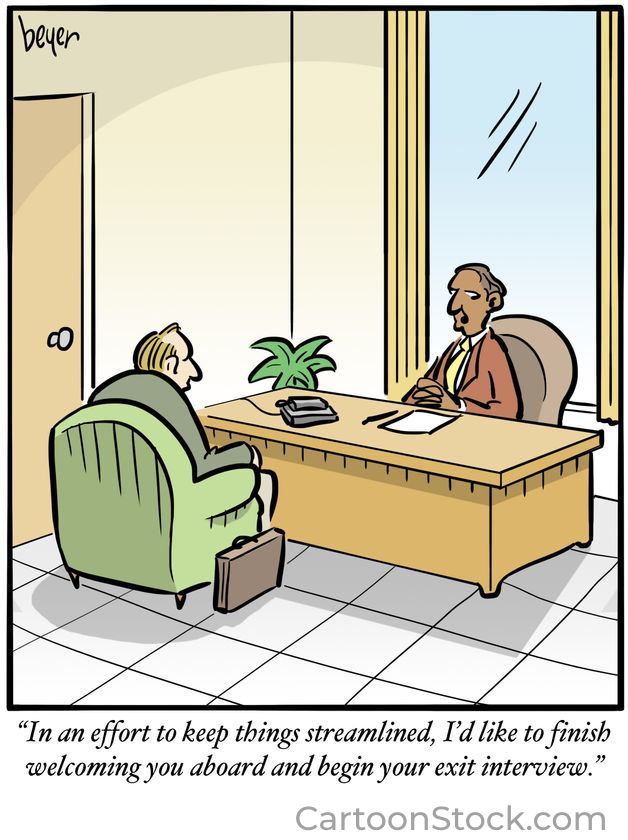
The Exit Interview
Many organizations skip this entirely, which is a missed opportunity of the highest order. If you are going to do one, and you should, the goal is not to complete a form. The goal is to create an environment where the employee feels safe enough to tell you the truth.
That means conducting it at the right time (not the day they resign, when emotions are high, but closer to their final day), in a comfortable and private setting, and ideally with someone they trust — whether that’s their direct leader or an HR partner. Most importantly, the person conducting the interview should be genuinely listening, not defending.
Here are the questions worth asking:
- Why are you leaving? (This answer often differs from what they said on resignation day — the pressure is off now)
- What was the most satisfying part of your job? What was the least?
- What could your supervisor have done differently to support your success?
- How did you feel about the training and development available to you?
- Were you satisfied with your compensation and benefits?
- Would you recommend this company to someone you care about?
- What suggestions do you have for your department or the organization as a whole?
- Any parting thoughts?
What you do with the answers matters just as much as asking the questions. If the feedback goes into a file and is never revisited, you’ve wasted everyone’s time. Share relevant themes with your leadership team. Look for patterns. Act on what you learn.
Reflection
After the exit interview, the most important conversation you will have is with yourself.
Was this preventable? Was it predictable? Could you have seen this coming?
In my experience, the exit interview almost always reveals a failure of the ongoing relationship — specifically, a failure of consistent one-on-one conversations and genuine engagement over time. Almost everything an employee shares on their way out could have been addressed months earlier, had someone been asking the right questions all along.
The most common reason people leave isn’t money. It’s feeling unseen.
When an employee cites growth, trust, empowerment, or communication as reasons for leaving, that should ring alarm bells and be immediate cause for reflection and change. And if you have multiple employees leaving for the same reasons? Now the really big alarm bells are ringing — the ones in the GM’s office.
In a perfect world, the employee is leaving for a glorious new opportunity — one that is fulfilling, lucrative, and simply too good to pass up. In those cases, all you can do is congratulate them, thank them for their hard work, and send them off with love.
The unfortunate reality is that most resignations trace back to negative and preventable factors. While these situations are difficult, the worst thing we can do is let someone walk out the door without having an honest conversation, asking the hard questions, and genuinely learning from what they have to say.
Every exit interview is a conversation you should have had earlier. The goal is to make sure the next one never gets that far.
Leave a Reply