Author: Vincent

  • Rockstars vs Superstars: Why Your Best Employee Shouldn’t Always Be Promoted

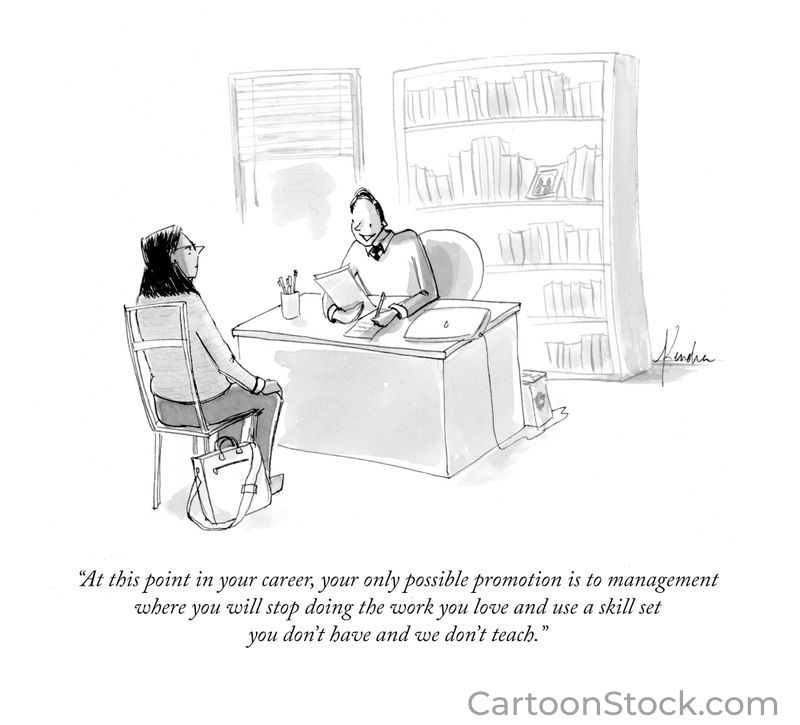
    In leadership there is such a thing as a good problem to have. Vanessa, a housekeeper on my former team, was a high performer – fast, efficient, friendly, and genuinely cared about the guest experience. She was happy and naturally we wanted to keep her happy. With high performers, our first instinct is usually to promote them – many times this is the right decision, sometimes it isn’t. Vanessa, with all of her redeeming qualities, was hesitant when approached about the idea of a promotion.

    She said she didn’t want the extra stress of being a supervisor and that she didn’t feel strong when it comes to administrative tasks and coaching/guidance. We tried to convince her she could do it with some encouragement (growth happens through periods of discomfort) but she was still reluctant.

    Our persistence led her to try out the new role on a trial basis. Fast forward to the end of the week; she did well enough, but when asked her thoughts on proceeding further, she insisted on remaining a housekeeper.

    We were a little sad, as we were in need of a leader, but this was a blessing in disguise. Vanessa was a Rockstar.

    As Kim Scott notes in her book, Radical Candor, there are two types of high performing employees, a Rockstar and a Superstar.

    Rockstars are employees who:

    • Excel in the current role
    • Provide consistency and reliability
    • Are the backbones of operations
    • Bring institutional knowledge and steady performance
    • May not seek promotion or added responsibility, but are invaluable

    Superstars are employees who:

    • Are growth oriented and seek advancement
    • Want new challenges and increased responsibility
    • Drive innovation and change
    • Want to break through the glass ceiling (and may change jobs if they can’t)

    Both Rockstars and Superstars are essential to a high performing team, but there is a balance. Too many superstars can cause conflict (too many cooks in the kitchen) and too many rockstars can lead to stagnation.

    Neither is better or worse than the other and it would be a grave mistake to give less time and attention to a rockstar because they don’t want more responsibility. We tend to take rockstars for granted because they don’t demand attention—but their absence is immediately felt. When a rockstar calls in sick or leaves, you suddenly realize how much he or she was quietly holding the operation together.

    The approach we take to managing each one is the key to success. When we push rockstars into roles they don’t want, we’re setting them up for the Peter Principle—a theory formulated by Dr. Laurence J. Peter in 1969 that states: “In a hierarchy, every employee tends to rise to their level of incompetence.” In other words, people get promoted based on their performance in their current role until they reach a position where they no longer excel. Vanessa was nearly a victim of this. She was an exceptional housekeeper, but that didn’t mean she’d be an exceptional supervisor. By respecting her choice to stay in her role, we kept a rockstar instead of creating an incompetent manager.

    How to Support Rockstars

    Rockstars need recognition, but not the same kind as superstars. They don’t necessarily want the spotlight or new challenges—they want to be valued for their consistency and expertise. This might look like:

    • Public acknowledgment of their reliability and quality
    • Small increases in pay or benefits
    • Special responsibilities that honor their expertise without requiring management duties
    • Being consulted when training new employees
    • Protected schedules or preferred shifts

    The key is recognizing that “career growth” doesn’t always mean “moving up.”

    How to Support Superstars

    Superstars aren’t necessarily easier to manage. When there’s no position available for them to move into, they get restless. If you don’t give them new challenges, they’ll find them elsewhere—at your competitor. This is a good problem to have. Here’s how to keep them engaged:

    • Give them ownership of special projects and initiatives
    • Provide stretch assignments that challenge their abilities
    • Let them mentor and develop other team members
    • Create visibility for their contributions
    • Discuss their career path and advancement opportunities regularly

    Keep them challenged or risk losing them to your competition.

    It’s important to note that employees can shift between rockstars and superstars. For example, a superstar may shift into the role of a rockstar when they start a family and their priorities change. A rockstar may reach a stagnation level that resembles boredom and decide they are now ready for a new challenge.


    In Vanessa’s case, we found a third path. She wasn’t formally promoted, but she was given additional responsibilities that matched her strengths—a slight pay increase and the title of VIP Lead, responsible for all VIP arrivals. She got recognition and growth in her role. We kept an exceptional housekeeper instead of creating a mediocre supervisor. Everyone won.

    Not every high performer wants or should be promoted. The best leaders recognize the difference between rockstars and superstars—and manage each accordingly. Your rockstars keep the operation steady. Your superstars drive it forward. You need both. The key is knowing which one you’re dealing with and what they actually need to thrive.
    Rockstars vs Superstars: Why Your Best Employee Shouldn’t Always Be Promoted
  • The Schedule: Your Most Underestimated Leadership Tool

    A wise man once told me, the two most important documents for any employee are their schedule and their paycheck – you better make sure those two things are accurate each and every week. (Thank you, Matt Chriscoe, for that wisdom.)

    Too often I see leaders fail to give schedule creation the proper time and energy it deserves. While both are equally important, I recommend creating a schedule with the needs of the business first, followed by the needs of the employee. The goal is to find a happy medium. Here’s how:

    To Meet the Needs of the Business

    Know your numbers. Guest arrivals, dining covers, special events—whatever drives your operation. This data should be front and center on your schedule so anyone looking at it can understand the staffing decisions you made.

    Determine your staffing needs. There are two approaches here:

    1. The formula approach – If you have X arrivals, schedule Y staff. This is common in corporate hotels with strict SOPs. It’s consistent and easy to follow.
    2. The analytical approach – My preferred method. Look at each day individually and think about not just how many people you need, but who you need. Your staff aren’t interchangeable. Some excel during high-pressure days, others shine in different situations. Match your people to the demands of each day.

    Of course, some staffing decisions are non-negotiable. If your front desk operates 24/7, someone needs to be there around the clock.

    Watch your hours. Schedule part-time employees for part-time hours and full-time employees for full-time hours. Avoid overtime unless it’s truly necessary or you can justify the expense to your boss. Consistent scheduling patterns help your team plan their lives and keep labor costs predictable.

    To Meet the Needs of the Employee

    Honor time-off requests. Your goal should be to accommodate all of them. If you can’t, prioritize based on who submitted first. And if you have to deny a request, don’t just mark it denied and move on—have a conversation. Can they take a half day instead? Is there a compromise? Explain why it wasn’t possible this time. That conversation matters.

    No brutal turnarounds. This is one of the most common scheduling mistakes I see—an employee closes at 11pm and then opens at 7am the next day. They get home exhausted, barely sleep, and drag themselves back to work running on fumes and caffeine. The result is poor service and a resentful employee. Unless someone specifically requests this arrangement, don’t do it.

    Limit consecutive workdays. I try to keep it to five days in a row, six if absolutely necessary. The common mistake here is managers create a new schedule without looking at the current one. An employee works Saturday through Tuesday on one schedule, then Wednesday through Sunday on the next. The same burnout results from above apply here. Your team needs time to recharge the batteries.

    Get the schedule out early. Your team has lives outside of work. They need to plan doctors’ appointments, childcare, social events—all of it requires knowing their schedule in advance. Sending out a Monday schedule on Sunday is disrespectful. I aim for at least four days in advance, but the earlier the better. Be sure the schedule is emailed to your team as opposed to simply posting on a department bulletin board.

    Bonus tip: If your operation allows for it, create schedules with multiple weeks at a time. Consistent business levels make this possible, and it’s a win-win. Your team can plan further ahead, and you spend less time on scheduling every week.

    Let’s put these principles into practice. Below are two schedules for the same front desk team operating 24 hours a day—one that follows these guidelines, and one that doesn’t.

    The Bad Schedule

    ❌ Problem 1: Charles should not be off on Friday the 26th. Nick will be responsible for the departure of almost all of the hotel. Recipe for disaster. Charles is a better choice to schedule than Brittany because he has 3 days off whereas Brittany only has 2.

    ❌ Problem 2: Sunday the 4th there were too many requests off permitted (One could argue a manager could assist with departures and then save labor but one or two billing challenges/upset guests and suddenly it’s a log jam).

    ❌ Problem 3: Sunday July 28th – Danielle is here until 11pm on Sunday and arriving at 6:50am the next day. You can swap her Monday shift with either Alex or Brittany successfully; however, if you do that, Danielle is now on a turnaround shift Tuesday morning (the puzzle always changes!).

    ❌ Problem 4: Danielle is working 9 days in a row! Combined with the turnaround mentioned above, she is burnt out and ready to quit, all because of poor scheduling.

    The Good Schedule

    What changed:

    ✓ Charles is working Friday the 26th, so Nick isn’t handling all departures alone

    ✓ Danielle’s brutal Sunday-Monday turnaround is gone—Brittany takes the Monday morning shift

    ✓ Danielle now works a reasonable number of consecutive days with proper rest between shifts

    ✓ Mid-shifts on high-occupancy days ensure guests get excellent service when the house is fullest

    Note: Some corporate hotels may be against mid-shifts. I would argue it’s a smart use of payroll to provide the best guest experience when the house is almost full.


    [Bonus tip: If you have another manager on your team, have them take a look at the schedule prior to distribution. A second set of eyes is always a great idea.]

    The schedule is one of the most underestimated tools in a leader’s arsenal. It is a major factor in employee morale and can often be the inflection point for an employee being happy with their job or considering other opportunities.

    Creating a thoughtful schedule is one of the most meaningful ways a leader can spend their time each week. When you get it right, everyone wins: your boss sees well-managed labor costs, your guests receive excellent service, and your employees have lives outside of work. More fundamentally, your team learns to trust you because you’ve shown them that their wellbeing matters. Without that trust, nothing else works.

    The Schedule: Your Most Underestimated Leadership Tool
  • The Other Side of the Desk

    In 2012, at just 24 years old, I was diagnosed with testicular cancer. At the time I had worked for several years at a high-end luxury resort in Southwest Florida (The Gasparilla Inn). Our General Manager at the time was Jon Reecher, and on the day I was diagnosed, I texted him to see if we could meet. I would be undergoing surgery in a few days and chemotherapy shortly thereafter. Work, which at the time was a priority for me, was about to be secondary and Jon needed to know.

    Jon’s office, like many GMs’, was large and welcoming. To the right was a small conference table, to the left was Jon’s desk. Behind the desk was a comfortable executive chair, and on the other side two chairs for his guests. This desk, while beautiful and likely made of a rare wood, was also commanding and created a clear barrier between two parties.

    I’d sat across that desk from Jon plenty of times before, me in a guest chair, him in his executive chair, talking through whatever issue was at hand. I never thought much of this setup, until the day I shared my unfortunate news.

    I recall vividly walking into his office. Whether it was my text asking to meet or the look on my face when I arrived, Jon knew I was in trouble. He quickly greeted me and then did something so simple, so easy, but so meaningful – he got up from his chair, came around to my side of the desk, and sat in the chair next to me.

    What followed was exactly what you’d expect when someone shares news like that. I cried. Jon, being the good leader he is, responded with sympathy and reassurance that my job would be safe. Truth be told, I can’t remember anything he said, but I do remember where he sat. By sitting next to me, by sitting with me, Jon eliminated the barrier between us and demonstrated empathy and care. He made me feel at ease and made a very difficult conversation just a little bit easier.

    That moment has stayed with me ever since. The next time a difficult conversation arises, don’t stay behind your desk. Come around. Sit with them. It’s such a simple gesture, but it eliminates the barrier between you and shows them they’re not alone in that moment.

    For anyone curious, I’m pleased to share that my treatments were a success and I am living a healthy, cancer-free life.

    The Other Side of the Desk
  • Five Pennies

    Sometimes guest service starts to feel like muscle memory. You smile, you greet, you move on. This dangerous slip into autopilot can lead to inauthentic connections—and guests WILL notice.

    To combat this, a Maitre D’ taught me a trick early in my career. He pulled five pennies from his pocket and said: “Put these in your left pocket, and every time you make a meaningful connection with a guest, move a coin to the right pocket (or back pocket if you prefer). The goal is for all five coins to be in a different pocket before the night ends.”

    Simply touching a table to check in on their night (“How is everything?”) didn’t qualify as a meaningful connection. There had to be genuine conversation and a sense that you’d formed a relationship with the guest.

    Here’s why it works: At 5pm when service starts, you have energy. By 8:30pm after dozens of tables, it’s harder to bring that same presence to your last guests of the night. That’s when the coins matter most. Reaching into your pocket and feeling one penny left becomes a challenge: *Can I make one more real connection before I leave?*

    This same principle can be applied to endless objectives.

    Maybe you’re a leader who wants to do a better job of recognizing the team? Every compliment is a coin.

    Maybe your goal is to sign up guests for tomorrow’s sunrise yoga class? Every registration is a coin.

    This gamification can be a fun method to reach your daily goals and prevents us from slipping into autopilot mode. Physical objects keep us honest—you can’t pretend you’ve made five connections when you still have five coins in your left pocket.

    I should note that unfortunately the penny is being phased out, so you may need to resort to a more expensive coin—apologies in advance for the extra weight!

    Five Pennies
  • Leading Through the Holidays

    Our guests join us on holidays to spend time with their loved ones and create memories. Our hotels and restaurants serve as the backdrop.

    As hoteliers, our responsibility is to work on these holidays and provide for those guests. I would love to call this responsibility a privilege, and the term burden is a bit too harsh, but it is certainly a challenge.

    Thankfully, there are things we can do as leaders to mitigate that challenge for our staff.


    Clear Expectations

    This starts all the way back when an employee is interviewed. Make it clear that while work/life balance is important, working in this business means you will need to work nights, weekends and holidays. As the year goes on and you get closer to said holidays, especially Christmas, speak with your team about the schedule so they can prepare accordingly.


    Have a System

    I would never recommend a pure “block” on requests off for holidays, but rather implement a system that is as fair and balanced as can be. An easy one is to use seniority as a determining factor. Someone who has worked at the company for 10 years should get a holiday off before someone within their first year.

    Another option is to allow team members to “choose” which holidays are important to them and try to organize the schedule accordingly. For example if you have an employee that celebrates Christmas Eve with her family every year, she can request off 12/24 and always works 12/25. This works out well and is a fair compromise.

    Finally, I recommend factoring in when a request off was made. If two employees of similar tenure submitted a request off, but one was submitted 6 months ago and one was submitted last week, I would give the nod to the advance planner.


    Consider Staff Families

    If you have a team member with young children at home, consider making every effort to give them Christmas off. It’s true we should treat people the same, but we’re also human and most team members will understand. Where this gets particularly tricky is in departments like housekeeping with many mothers on staff. Try and get creative here if you can by maybe scheduling partial shifts or cleaning as many rooms as possible in advance.


    Respect Cultural & Religious Differences

    In a diverse team, you may have team members who celebrate different holidays than others. This is a very good thing as it provides you as a leader with not only flexibility in scheduling but a greater opportunity to show you care. The best way to discover these cultural differences is to simply ask your team.


    Schedule Recovery Time

    When creating the schedule, consider how an employee can “recover” from working a holiday. An obvious example is if someone works a late night on New Year’s Eve, make every effort to give that person the next day off, preferably two, so they enjoy some well deserved rest.


    Show Gratitude

    This one is huge, and authenticity is key. I urge you to look everyone in the eye, shake their hand and thank them for their sacrifice in working the holidays. Let them know how much you appreciate it and how much of a difference they are making for our guests who choose to visit us. Consider working with the culinary team to ensure everyone is well fed on holidays and that they get some time to break bread with their coworkers. I remember sharing many wonderful meals with coworkers on holidays and honestly they were really nice moments.

    Finally, when the budget allows, it’s always nice to provide some sort of monetary bonus. With help from Senior Leadership, this can be streamlined every year and provided in a lovely Christmas Card.


    Lean Into It – Embrace the Joy

    My final piece of advice is I think the most important—a shift in mindset. By and large our guests who are visiting our hotels and restaurants are arriving in a great mood, they are in the festive spirit and are grateful for our service. This joy is contagious and the best thing we can do is lean into it. Smile big and wish each and every guest a Merry Christmas like you are St. Nick himself. You’ll be surprised how this will “fill up your cup”.


    The holidays are special for many reasons—for some it is faith, for others it is family, for many it is sacrifice and memory. Working on these holidays is a challenge, and while we can’t ignore it, we can soften the blow with great leadership.

    To all the hospitality professionals who will be working this holiday season—thank you. Your sacrifice allows guests to experience moments they will treasure for years to come. The work you do matters more than you know.

    Merry Christmas.

    Leading Through the Holidays
  • Choosing the Right Words (Part 2: Words with Staff)

    Danny Meyer built Union Square Hospitality Group on a simple but radical idea: your staff comes first, then your guests. In his book Setting the Table, he explains that the language leaders use with employees directly shows up in how employees treat guests. If you bark orders at your team, don’t be surprised when they deliver robotic, transactional service. If you explain the “why,” say please and thank you, and treat them as partners—that warmth transfers to every guest interaction.

    Unfortunately, some leaders think that because they are in a position of authority, they get to speak to their team members in a certain way—one that is imperative, demanding and at its worst, demeaning. The leader might not take it to this extreme, but they may inadvertently veer towards this style of communication, especially when stress levels are high and they think it’s what the situation calls for.

    Fortunately, a small tweak in word choice or tone can make all the difference.

    Here are some examples of good and bad scenarios when speaking with staff.


    Scenario 1: Delegation/Requests

    Poor: “I need you to clean the lobby – do it now.”

    Better: “Jordan, the lobby is looking a bit disheveled, could you please clean it as soon as possible? We would hate for our guests’ first impression to be a dirty lobby. Thank you.”

    Notice how:

    • The leader used simple manners with the use of please and thank you
    • The leader personalized the request by using the staff member’s name
    • The leader posed the sentence in the form of a request as opposed to a demand (if Jordan fails to execute the task in an appropriate time frame, the approach can then change to something more direct)
    • The leader explained the “why” behind the request which supports the emphasis on doing it as soon as possible

    Scenario 2: Coaching/Feedback

    Poor: “You did a bad job when speaking to that guest. What is wrong with you? You were cold, dismissive and unhelpful.”

    Also Poor: “Please remember to be nice to our guests. You’re doing a great job – just remember to be nice. You’re not in trouble.”

    Better: “How do you think that conversation with Mr. Spieth went? I believe there is room for improvement. I want you to succeed so I’m going to be frank with you – the language you used gave the impression that you did not want to help them. Instead of saying “I have no idea,” we should be saying “Please allow me to check on that for you,” and then follow through on answering the guest’s question or ask a team member for help. Unfortunately, this guest likely had a poor impression of our service. Remember, we are in the business of helping people and our core values reflect that. Let’s role play that conversation again.”

    Notice how:

    • The leader first posed the question to the team member about how they think it went. The hope is that the employee will come to their own conclusion that it didn’t go well.
    • The leader did not sugar coat the feedback and focused on the specific area of improvement as opposed to a generality.
    • The leader referenced back to the company’s core values which all employees should know and understand – these can be a “north star” for situations like this.
    • The leader offered additional training in the form of role play

    Scenario 3: Recognition

    Poor: No recognition at all

    Better: “Nice job today”

    Best: “You were awesome today. With so many guests arriving at once, it took hard work and organization to please our guests. You went above and beyond – we would not have succeeded without you.”

    Notice how:

    • The leader gave recognition. So many leaders fail to do this and instead provide a stream of negative feedback.
    • Moving from “Better” to “Best”: The leader was specific about what the employee did well (not just “nice job”)
    • The leader explained the impact (“hard work and organization to please our guests”)
    • The leader emphasized the employee’s importance to the team’s success (“we would not have succeeded without you”)

    Scenario 4: Accountability

    Poor: “You’re late for work again. If you keep arriving late, I’ll have to write you up.”

    Better: “Jordan, can we speak in private for a moment? I noticed you’ve been late for your shift twice this week, is everything ok? Please understand that when you are late, it affects your teammates and the operation as a whole. As a reminder, we have a formal attendance policy here that clearly outlines our expectations and accountability steps. How can I help you arrive on time in the future?”

    Notice how:

    • The leader created an environment where accountability can happen in a private space. This lets the employee know the conversation is important and also allows for a candid discussion as needed
    • The leader asked if everything was ok, allowing for the employee to share if something was truly preventing them from being on time
    • The leader explained “why” being late is not appropriate and the real effects on the team
    • The leader reminded the employee of the attendance policy so they have a clear understanding of what the consequences of their actions are
    • The leader offered to assist the employee with helping them arrive on time. This often falls flat as it is usually within the team member’s control; however, sometimes they may express a desire for a change at which point the leader will need to assess if it’s possible

    Danny Meyer built an empire on a simple truth: staff first, guests second. It may sound backwards until we realize that exceptional service to guests cannot happen without exceptional treatment of our staff.

    Our team members are not pawns on a chess board—they are people with their own goals, challenges, and lives outside of work. When we speak to them with respect, explain the “why,” and treat them with dignity, they become invested in something greater than themselves. They buy in to your mission and values, and every guest interaction will reflect that.

    The words we choose with our staff shape our culture every single day. Choose them wisely.

    Choosing the Right Words (Part 2: Words with Staff)
  • Choosing the Right Words (Part 1: Words with Guests)

    Many moons ago, I was a young and foolish Assistant Dining Room Manager at a high end restaurant. White table cloth, dress code, fine wine etc… I approached a table and asked the following (terrible) question:

    “Are you still working on this sir?” As I gestured to his plate.

    The gentleman gently sets down his silverware, takes a deep breath and says:

    “Young man, I am not at work, I am enjoying a nice dinner with my wife. This meal is not laborious, and until now, I was not under any stress. You should be asking, ‘Are you still enjoying your meal?’ OR simply ask nothing at all and remove it when my knife and fork indicate I am finished.”

    OUCH!

    Needless to say I never made that mistake again—while the sting in the moment was real, I am grateful for the gentleman’s enthusiastic correction.

    What I have learned since then is that your words have power. They can close conversations or open them. They can assign blame or provide solutions. They can diminish experiences or elevate them. The principles apply to the words we use with guests AND with our team members. This week we will look at the words we use with guests.

    Let’s look at a few more scenarios where poor language was chosen and then review the alternatives. We will assume the basic skills are already in place and try to dive deeper.


    Scenario 1: Reservations Sales Call

    In this scenario, the call has gone well so far—a warm greeting has taken place, the caller’s name is asked for and the team member introduced themselves. Things go south when the caller asks for dates that the hotel is low on inventory.

    Guest: “I’m looking to stay on March 5th and 6th.”

    Resv Agent: “Ok, unfortunately I only have our standard room left.”

    Guest: “Uhhh ok, that doesn’t sound great.”

    Resv Agent: “It’s a nice room but it is our lowest tier room and it’s all we have left. We are almost sold out.”

    Guest: “Ok, I’ll call back—thanks.”

    Let’s try again:

    Guest: “I’m looking to stay on March 5th and 6th.”

    Resv Agent: “Wonderful! I’m so glad you called today, Mr. Spieth—that seems to be a popular weekend as we are almost fully committed; however, you are in luck as we have one beautiful standard room remaining.”

    Guest: “Oh my gosh, that’s great news! Is that room ok for my wife and I?”

    Resv Agent: “Absolutely it is! It is on the cozier side in terms of square footage; however, the room is very comfortable, impeccably decorated and provides access to all our amenities plus this room will have less strain on the wallet so you and Mrs. Spieth can splurge on that extra spa appointment.”

    Guest: “Now you’re speaking my language—let’s book it!”

    Notice how the staff:

    • Spun the last available room and lower room type narratives into a positive instead of a negative
    • Used the guest name
    • Used the term “fully committed” instead of “sold out”
    • Used descriptive language to describe the standard room (beautiful, cozy instead of small or nice)
    • Used “we” statements instead of “I” statements (This could be its own post as it’s controversial but I believe it shows a collective togetherness. The agent is an ambassador and represents the larger “host” embodiment of the hotel itself.)
    • Reframed the lower room tier as a financial opportunity, upselling spa services with the money saved

    Scenario 2: Guest Arrival

    In this scenario, a guest has arrived at the hotel and has just walked into the lobby with luggage. The staff are talking amongst themselves and despite seeing her walk through the door, the staff don’t greet her until she is at the desk.

    Desk Agent: “Hello, checking in?”

    Guest: “Um, yes I am, my last name is Spieth.”

    Desk Agent: “Great, the screen will light up there for you to sign and then ask for your credit card—can I see your ID?”

    Guest: “Ok.”

    Desk Agent: “So your room is not ready yet, but it will be done by 4pm.”

    Guest: “Ok…what do I do with my luggage?”

    Desk Agent: “We can store it for you.”

    Guest: “Ok, so I should just check back later?”

    Desk Agent: “That’s right.”

    Let’s try again:

    A guest arrives at the hotel and enters the lobby with luggage. Two staff members are present—one near the entrance, one at the front desk:

    Bellman: “Good afternoon sir, welcome to the Grand Hotel, may I assist you with your luggage?”

    Guest: “Yes, that would be lovely.”

    Desk Agent: “Welcome sir, how can we help you today?”

    Guest: “I’m here to check in, last name is Spieth.”

    Desk Agent: “Excellent, I see you’ve been here before, welcome back and happy birthday as well!”

    Guest: “Thank you!”

    Desk Agent: “It looks like our team is still preparing your room; however, we would be happy to store your luggage and get you settled in. You are welcome to use all of our amenities and we will reach out to you as soon as the room is ready. We’ve let the team know you are here so we can prioritize your room.”

    Guest: “Ok, that sounds great—thank you!”

    Desk Agent: “Our pleasure Mr. Spieth.”

    Notice how the staff:

    • Immediately welcomed the guest upon arrival
    • Offered to assist with luggage
    • Used a warm welcoming greeting instead of a transactional one (“checking in?”)
    • Used the guest name
    • Acknowledged the guest’s loyalty and the special occasion they were celebrating
    • Provided a softer approach to delivering bad news about the room not being ready which included a proactive approach that served the guest

    Now this was obviously an extreme example, but it illustrates the point—hospitality should be a warm and welcoming conversation with active listening, eye contact and thoughtful responses.


    Scenario 3: Concierge/Activity Request

    Guest: “Can you get me tickets to the show tonight?”

    Concierge: “That show is sold out. It’s been sold out for weeks.”

    Guest: “Oh. Well, is there anything else to do around here?”

    Concierge: “There’s a list of activities in your room.”

    Let’s try again:

    Guest: “Can you get me tickets to the show tonight?”

    Concierge: “That’s one of our most popular shows! Unfortunately that performance is fully committed this evening; however, I’d love to share some other options for you and Mrs. Spieth. We have an incredible jazz performance at the hotel tonight, or I can secure tickets for tomorrow night’s show if you’re able to extend your stay. There’s also a fantastic new restaurant that just opened—I can get you a reservation there within the hour.”

    Guest: “Tell me more about the jazz performance.”

    Notice how the staff:

    • Acknowledged the popularity of the request
    • Used “fully committed” instead of “sold out”
    • Used the guest name
    • Immediately pivoted to solutions
    • Offered multiple alternatives
    • Stayed engaged and helpful rather than directing them elsewhere

    Common Phrases and Better Alternatives

    • Sold out → Fully committed
    • I don’t know → Please allow me to check
    • Checking in? → Welcome to the [property name], how can we help you?
    • You’ll have to… → You are welcome to… or We invite you to…
    • You’ll have to wait → We appreciate your patience, may I offer you something to drink while we take care of this?
    • We’re busy right now → Thank you for your patience, I will be with you in just one moment
    • No problem → I’m happy to help / You’re most welcome / It is our pleasure
    • Hold on → I will be right with you, thank you for your patience
    • You have to → If you could please
    • Have a good one → Thank you for joining us, we look forward to seeing you again / Enjoy your stay / Enjoy your evening

    There are countless more examples and some may vary depending on location—for example, you may welcome someone into your hotel with “Aloha!” in Hawaii, but this may not be the best choice to welcome someone in New York City.


    That gentleman who corrected me about “working” on his meal did me a favor. He taught me that our words shape experiences—they either add stress or remove it, close doors or open them. In hospitality, we want to open doors (metaphorically and for real!).

    Next week, we’ll review how our words with staff affect our leadership.

    Choosing the Right Words (Part 1: Words with Guests)
  • Setting Up New Hires for Success (Hiring Series: Part 3)

    You’ve just hired a new employee and it’s their first day. Are you prepared? Let me tell you how it usually goes. A team member is told when their first shift is and they show up to their designated work area—dazed and confused. As their blood pressure rises from anxiety, they introduce themselves to another hourly employee who is surprised the new hire is here. The employee is then thrown into the deep end with little information and set up to fail.

    Here is how it should go:

    Set the Stage Before They Arrive

    When an employee arrives on the job site for the first time, they should be warmly welcomed by whoever hired them or at the very least someone else in leadership who can fill in. The team should be aware of the new hire’s arrival well in advance. I like to announce it on the upcoming schedule. Bonus points if you reach out to the new hire a few days before they start, ask them a few questions (Where are you from? What’s your favorite hobby? What’s your go-to karaoke song?), and share a short bio with the team. This helps break the ice before they even walk in the door.

    Their First Day

    For the new hire, the first day should be fun! Not overwhelming, not stressful, not sink-or-swim. Fun. That means a manageable pace, friendly faces, and a sense that they’re joining a team that cares about their success.

    When the employee arrives, have everything ready for them. Uniform, desk, onboarding schedule, etc. Schedule time to tour the employee around the work area, introduce them to the staff and make them feel welcome. The team member knows nothing and likely has tons of questions. Where do you park, where is the restroom, how does the employee cafeteria work? It’s good to have a list of things to review on the first day.

    During that first day, define expectations and ensure they understand the importance and purpose of their job.

    The First Week and Beyond

    What tools do they need for their training? Who are they reporting to? If you are delegating the training to another team member, ensure they are equipped to do the training. I recommend providing a schedule of at least the first week with specific areas of focus for each day and who is doing the specific training. For example, a new housekeeper may spend one day learning the role of public space attendant. If the trainer is the current PA attendant or a supervisor, they should be informed in advance of the training so they can prepare accordingly When the new hire begins their day, they should have an expectation of what they are learning and who they are learning it from.

    Leaders should provide supportive material such as a formal training manual or a certification checklist that includes everything an employee should learn to be on the job on their own. Here’s an example of what a training certification sheet looks like.

    Check in with the employee throughout the first week. Ask how things are going—and don’t just assess comprehension. Ask how they feel. Do they feel supported? Are they enjoying their work? Do they have the tools they need for success? These emotional check-ins matter just as much as technical ones.

    Continue these check-ins at 30, 60, and 90 days. I recommend setting up calendar reminders for each benchmark the day you hire them—that way you won’t forget.


    When it comes to leading your teams, you can never go wrong with the following: Hire Right, Train Right, Treat Them Right.

    And that’s the complete hiring journey—from the first application question to the 90-day check-in. Get these fundamentals right, and you’ll build a team that doesn’t just show up to work, but actually wants to be there.

    Setting Up New Hires for Success (Hiring Series: Part 3)
  • Interview Tips and Tricks (Hiring Series: Part 2)

    Last week we talked about screening candidates with one simple question. Now let’s say you’ve found someone promising—their application looked great, they gave a thoughtful answer about why they want to work for you, and you’re definitely interested. This is where the real work begins.

    The hiring process is a high-risk gamble. A lot of time, money, and resources go into hiring and developing a team member. As the hiring manager, you have an important decision to make that will affect many people—the most obvious being the candidate themselves. Here are some helpful tips for conducting a great interview.


    Before the Interview

    1. Screen the applicant by phone first

    Before setting up a formal in-person interview, call the candidate and have a brief discussion with them. Let them know their application or resume caught your eye and see where the conversation leads. If the role has some “non-negotiables” such as working nights, now is a good time to put those cards on the table. If the employee can’t work nights, there is no need to waste further time and energy on an in-person interview (for that specific role). While on this call, also pay attention to their demeanor—are they friendly and engaging on the phone? Are they professional? If not, this is likely a red flag for any guest-facing role.

    2. Provide clear details when scheduling

    When scheduling the interview, be sure to provide exact details such as the meeting time and place. Let the applicant know who to ask for when they arrive. I wish this wasn’t the truth, but for some hourly roles, a reminder to dress professionally is also needed*. These details should be verbalized on the screening call and then sent via email to lessen miscommunication errors.

    *(Note: Appearance isn’t an auto-disqualifier for me as I once hired a young man at a job fair wearing gym shorts and sandals; however, he had great charisma and people skills, so I gave him a shot, and to this day he has a thriving career as a bartender).

    3. Choose the right setting

    Select an appropriate setting for the interview. A traditional office isn’t a bad choice, but if the weather permits, I like to conduct interviews outside—maybe at a patio table or in a quiet garden area—especially if the applicant is meeting with multiple leaders. Meeting outside helps to disarm the applicant which generally leads to more fruitful conversation.


    During the Interview

    4. Identify what success looks like in the role

    Now for the fun part—actually conducting the interview! I could write an entire post about this, but it boils down to:

    1. Identifying the most important ingredients for success in this position
    2. Asking the right questions to see if this person has those ingredients OR has the potential to “learn” those ingredients

    I like to break it down into hard skills and soft skills.

    Hard skills are technical, teachable, and measurable. If you are hiring a valet, they should know how to drive a car. If you are hiring a chef, they should have some knife skills, etc…

    Soft skills are more difficult to understand but more important to the hiring manager. They are defined as personal attributes that enable someone to interact effectively and harmoniously with others. These are things such as communication skills, teamwork, adaptability, and time management. If you are hiring for a front desk agent, you want to ensure they have strong communication skills. During the interview they should be engaging and personable with warm and engaging body language. I have hired many good desk agents who have never worked in a hotel but were raised with the necessary skills to speak to someone confidently and with emotional intelligence.

    5. Make it a conversation, not a checklist

    Prior to conducting your interview, I recommend compiling a list of questions that you hope to ask, but don’t be bound to the list. Your interview should be a conversation and should feel natural. When the interviewee is comfortable, they will show their true colors. If the conversation is losing steam, you can refer back to your questions and hopefully regain momentum.

    6. Ask my favorite closing question

    I have one question I always ask towards the end of the conversation: “Why should we choose you?” This can be a loaded question and the applicant may need a moment to answer, but allow for that moment. Listen for specifics—do they connect their skills to your needs? Do they show self-awareness about their strengths? Do they demonstrate enthusiasm for this specific role, or are they just looking for any job? You’ll know a strong answer when you hear it.

    7. Give them a chance to ask questions

    Be sure to provide the applicant an opportunity to ask questions—if they don’t have any, it could be a red flag.


    After the Interview

    8. Provide a realistic timeline for next steps

    At the conclusion of the interview, provide a realistic timeline for next steps. Let them know an approximate timeline from which a decision will be made.

    9. Follow up with all candidates

    It can be painful, but I also recommend reaching out to applicants who don’t get chosen to let them know the position has been filled. You don’t need to give a detailed explanation of why they weren’t selected, but a brief, respectful message goes a long way. Sometimes a candidate isn’t right for one role but could be perfect for another position down the road—and they’ll remember how you treated them in the process.


    Now that you’ve hired the perfect candidate, it’s time to talk about their first days on the job—and how to set them up for success from day one. See you next week!


    Interview Tips and Tricks (Hiring Series: Part 2)
  • My Favorite Hiring Question (Hiring Series: Part 1)

    I’ve interviewed hundreds of candidates over the years and my favorite question to ask any prospective candidate is quite simple:

    “Why do you want to work for our company?”

    With some help from your HR team, this question can be a required field to fill out on all job applications. I love this question because I think it tells a lot about a candidate long before we have decided to give them our time and energy to interview them. If the candidate provides a thoughtful and authentic answer, that’s a good sign to keep reading their application and consider them for next steps. If they provide a poor answer, it could be a sign to move on.

    The theory is that the candidate’s ability to answer that question is a reflection of their work ethic as a whole. If they cannot take a few moments to answer the question with a quality answer, why should we expect them to answer a guest question with a quality answer or follow a recipe with the appropriate accuracy?

    So, what do good and poor answers look like? Let’s take a look at these real examples below. I’ve replaced the name of the establishment with a fake hotel.


    Easy enough! This is a great example of an authentic answer. Short and sweet.


    Just “yes”? Likely going to be a “No…”


    Ok…moving on.


    Ok—a solid answer! The candidate used complete sentences, proper grammar, and gave a thoughtful (while somewhat canned) answer. It’s generic enough that they could send it to any hotel, but it shows effort and professionalism.


    Ha! I actually don’t hate this one—it’s definitely authentic, and I know plenty of great employees who come to work every day just for the paycheck but still do a great job. With that being said, I would tread lightly here. A savvy applicant would have provided a more thoughtful answer while still being true to their income-based motivation.


    Now we’re cooking with gas! This candidate gave specific examples of why they’re interested in The Grand Hotel and also used the opportunity to provide supporting evidence on why we should interview them. Well done.


    As you can see, an open-ended question like this can provide a variety of different answers. While I don’t think a poor answer is an automatic disqualifier, I do think it’s a strong indicator of applicant potential. You are welcome to also ask this question verbally on a screening call prior to a formal interview.

    Next week, I’ll share my approach to conducting interviews—from the screening call to the final handshake. See you then!


    My Favorite Hiring Question (Hiring Series: Part 1)